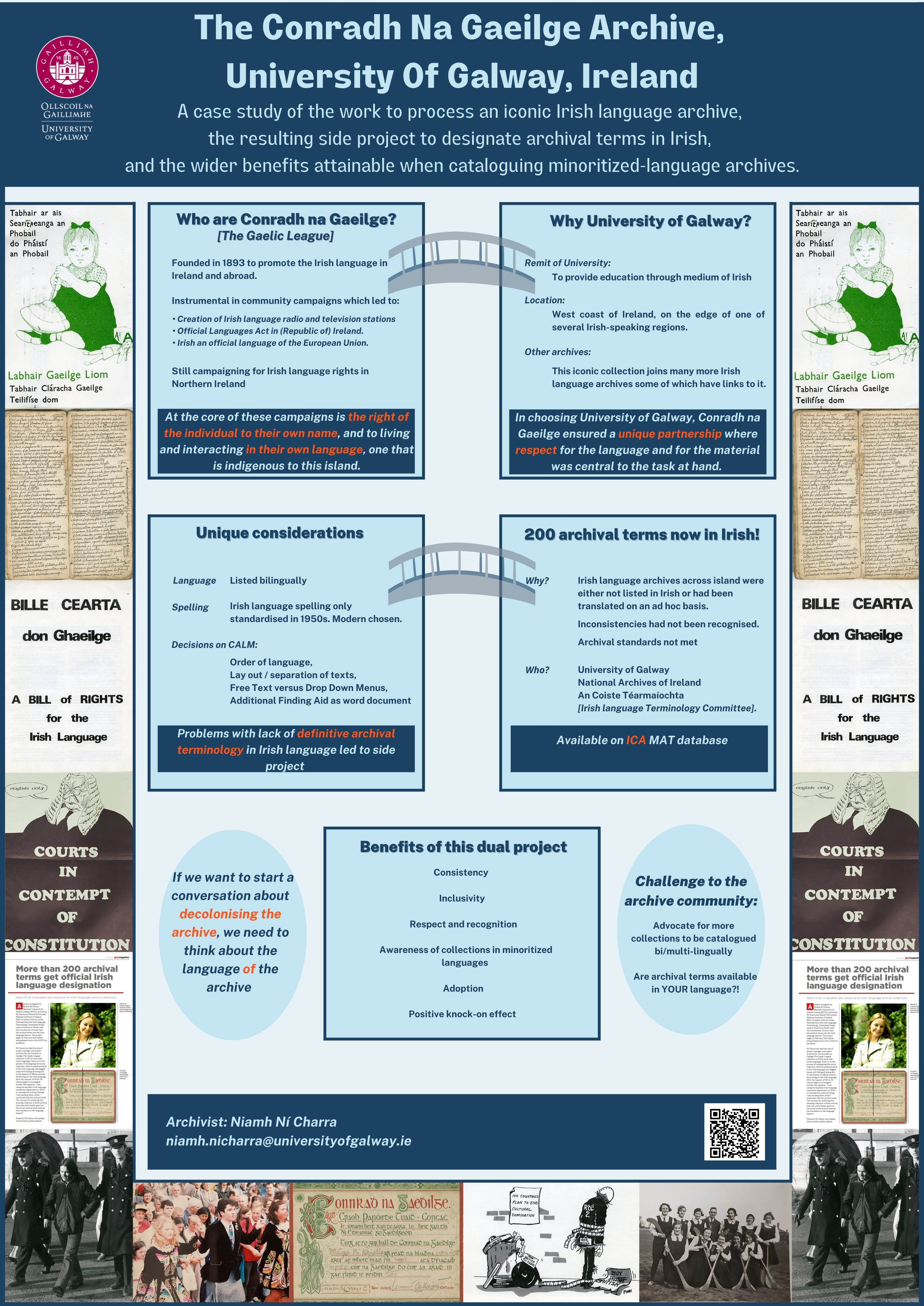
The theme of this year's conference is "Archives: Bridging the Gap", which is further divided into four categories: "Bridging the Digital Gap", "Bridging the Cultural Gap", "Bridging the Democracy Gap" and "Bridging the Distance". Ní Charra's submission falls under the second category and background information to accompany her onsite poster presentation follows below.
The Conradh na Gaeilge archive at University of Galway, Ireland

Who are Conradh na Gaeilge?
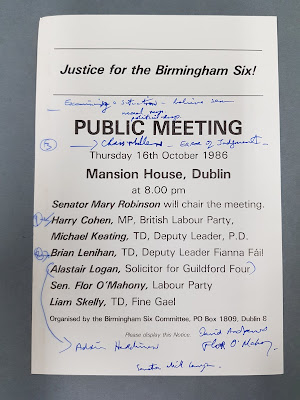
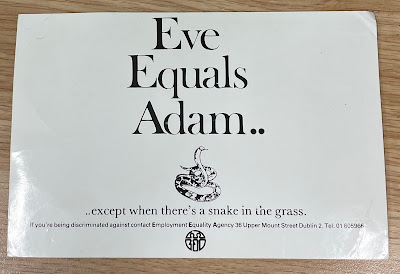
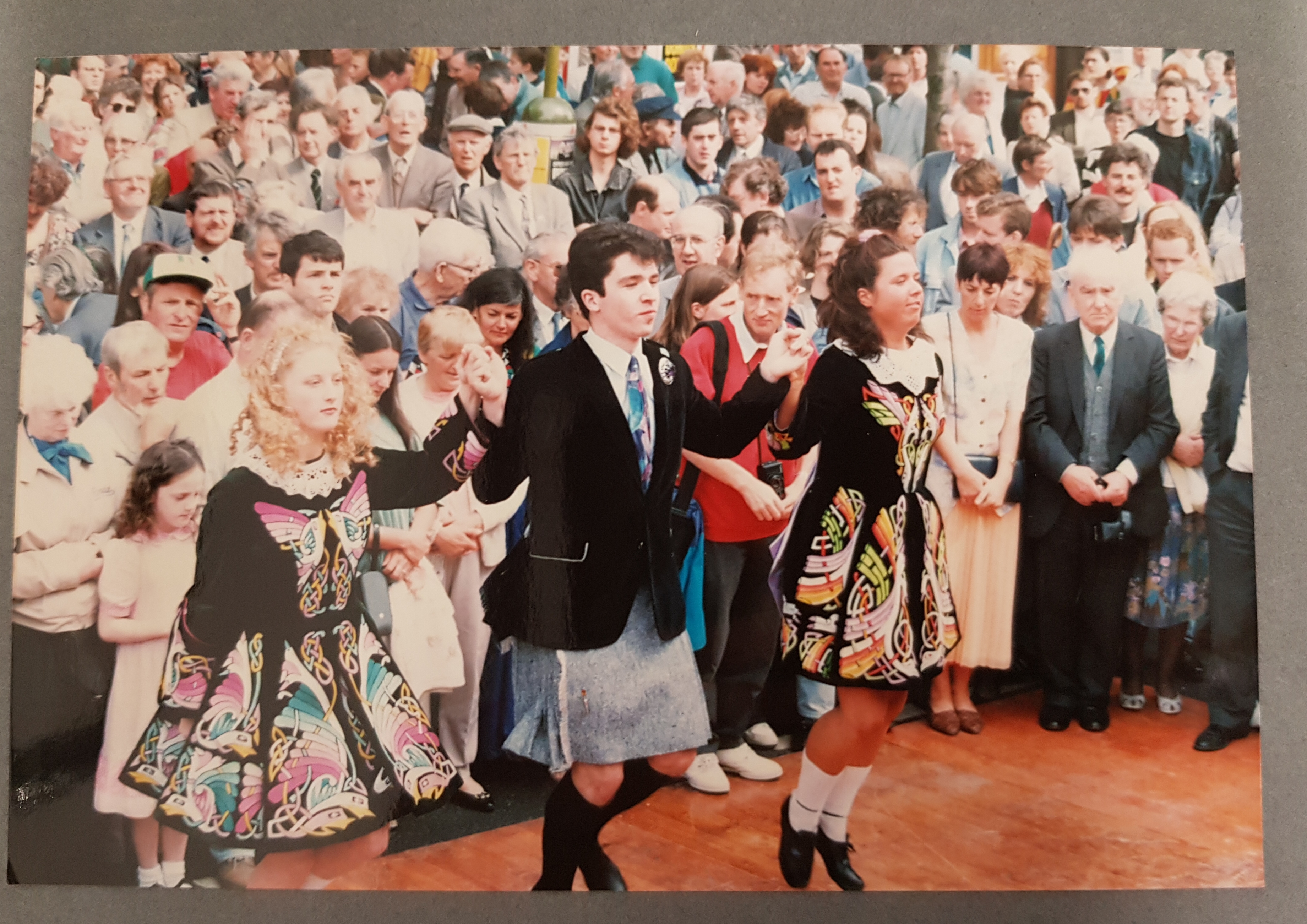
Conradh na Gaeilge [The Gaelic League] is an organisation which was founded in 1893 to promote the Irish language in Ireland and abroad. Material gives a unique insight into the last 130 years or more of the history of the island of Ireland. Staff were actively involved in promoting and observing the use of Irish across all aspects of everyday activities. A significant portion of material covers several language rights campaigns. Also included are documents relating to prisoners' rights and civil rights in Northern Ireland.
Conradh were instrumental in community campaigns which led to the
- creation of Irish language radio and television stations [1972, 1996]
- the enactment of the Official Languages Act [14 July 2003] in Ireland
- making Irish an official language of the European Union [1 January 2007]


- Remit of the university - a unique aspect of the University of Galway's remit as a university is its strategic commitment to the provision of university education through the medium of Irish, its aim to serve the Gaeltacht [Irish language speaking regions] and the Irish language community, and to create an exemplary bilingual campus.
- Location - the university is situated on the West coast of Ireland on the edge of the Connemara Gaeltacht, one of several Irish-speaking regions in Ireland. Furthermore, its links with the region are strengthened by its Irish language education and cultural centres in towns in both the Connemara and Donegal Gaeltachts.
- Other Irish language archives - this iconic collection joins many more Irish language archives at the university, many of which have links to it.
- Respect - in choosing the University of Galway, Conradh na Gaeilge ensured a unique partnership where respect for the language and for the material was central to the task at hand.
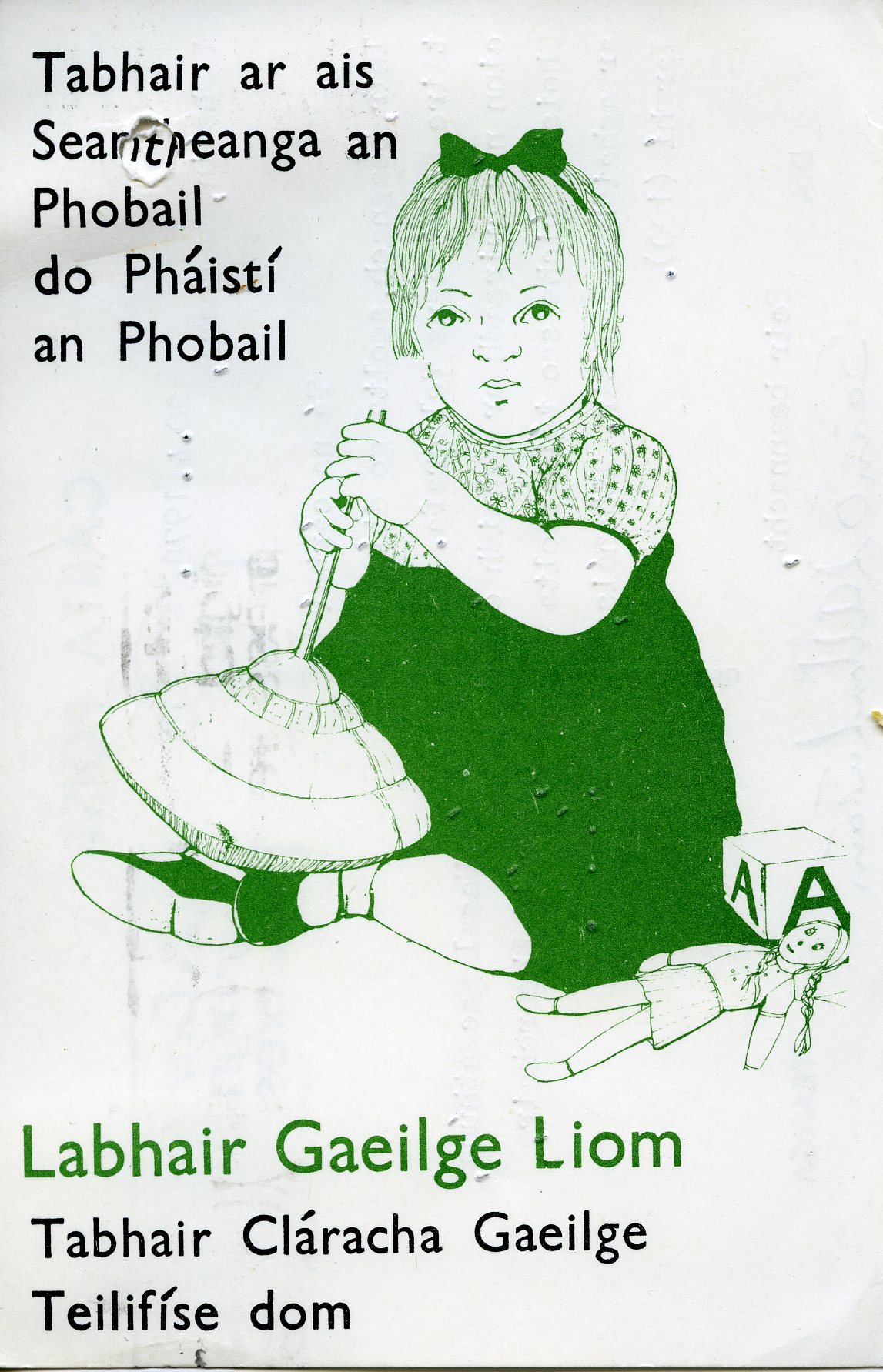


- Consistency - having this new terminology available encourages consistency in Irish language listing to archival standards.
- Inclusivity - it enables Irish language archives to be listed in Irish making them inclusive and ensuring those for whom the archives relate the most, have access.
- Respect and recognition - making such a significant archive available and doing so through Irish, using official terms in that language, is an important recognition of both the indigenous language itself, and the community who speak it as their first language.
- Creates awareness - collections in minoritized languages are often overlooked by researchers, despite being very rich in material. The stories in these archives are therefore often missing from the overall narrative.
- Adoption - having the terminology should hopefully encourage Axiell and others to adopt it and make their products available in Irish.
- Positive knock-on effect - this case study and new terminology should encourage more institutions to have more Irish language archives catalogued.